Northglenn's Median Price Keeps Disagreeing With Itself. What Karl's Farm Adds to the Mix
October 1, 2026
October 1, 2026
In March 2026, Redfin and Movoto each posted a median sale price for Northglenn: $475,000. The two trackers agreed on the number to the dollar. They did not agree on almost anything else. Redfin counted 40 homes sold that month. Movoto counted 113. Redfin clocked the typical sale at 11 days on market. Movoto said 21. By August, Movoto's own citywide figure had drifted to a median list price of $471,000, with homes sitting for a median of 55 days, while Zillow's home value index put the typical Northglenn home at $467,873, down 3.9% for the year, and claimed those same homes were going to pending in about eight days.
None of these numbers are wrong. They're measuring different things in a city small enough that a handful of transactions can move any one of them by a lot, and Northglenn’s housing mix now also includes a new development on the 66 acres where the Hinkhouse family ran a working dairy until 2012.
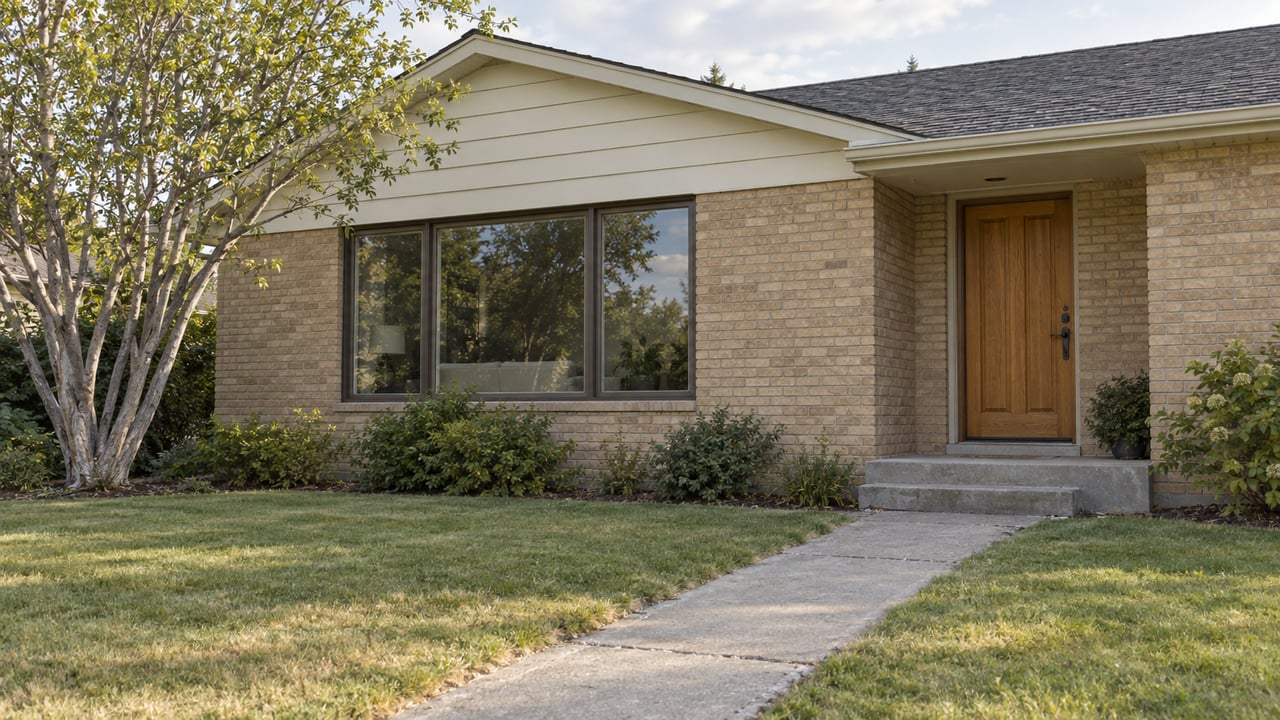
Northglenn's housing stock is unusually uniform for a reason that goes back to 1959, when Perl Mack Co. broke ground on a planned community called North Glenn. The development was successful enough to be named "The Most Perfectly Planned Community in America" in 1962, and the city incorporated under the shortened name Northglenn in 1969. Everything built since has mostly filled in around that original plan rather than pushed the city's boundary outward.
The result is a housing stock concentrated in a small number of named subdivisions rather than spread across dozens of newer developments:
Deza Estates sits along four blocks on West 99th Avenue and Palmer, Lunceford, and Rapp Lanes in southwest Northglenn. Its 29 homes were designed individually rather than pulled from a builder's catalog, which is part of why History Colorado's survey flagged them for national listing. Northglenn has since designated the enclave as a local historic district, which typically means exterior changes there face a layer of review that most of the city's 1960s ranches never have to clear.
That's the entire established side of the ledger: a handful of subdivisions built out decades ago, plus one small architecturally distinct pocket. Until recently, there was nowhere in Northglenn to buy a truly new house.
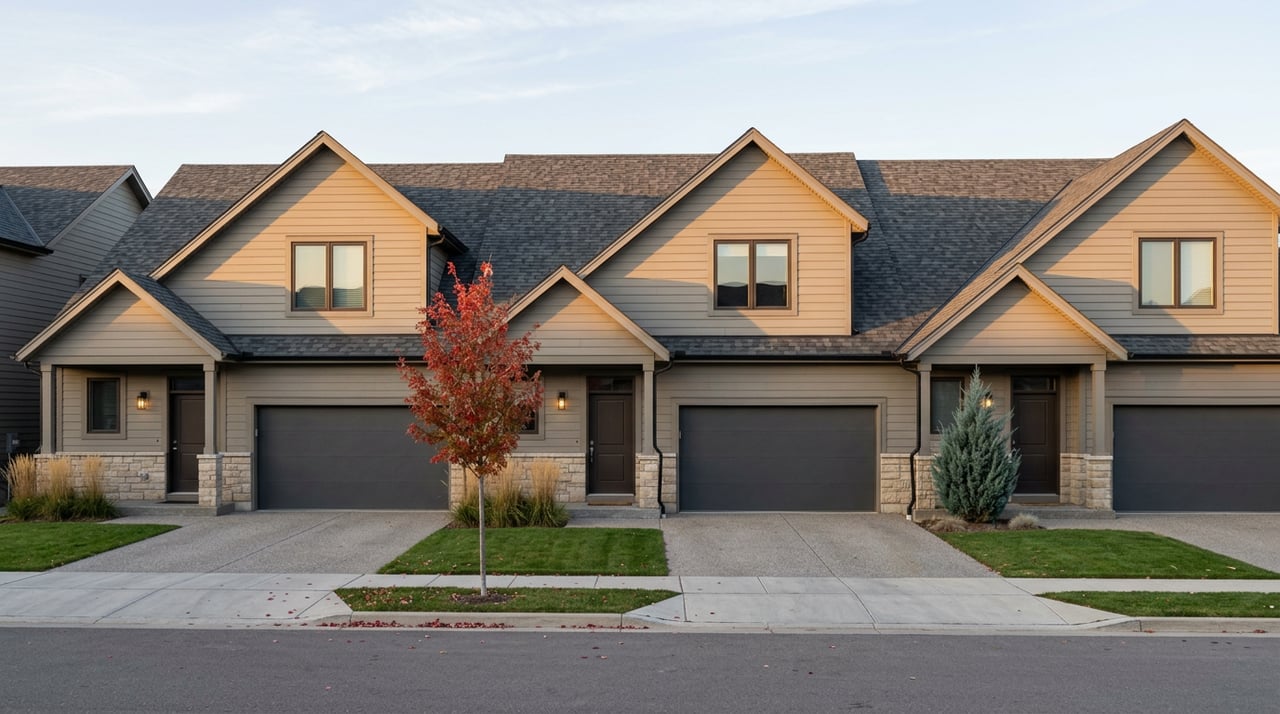
Karl's Farm Dairy operated in the middle of the city from 1947 until 2012, run by the Hinkhouse family, sending milk trucks into the growing north metro and hosting a petting zoo for decades before the land finally changed hands. What's rising there now is a 66-acre master-planned community carrying the farm's name, built out by a mix of developers: Southern Land Company handling the multifamily component, Richmond American Homes and Meritage Homes building for-sale product, all coordinated under KF Developers as master developer.
Southern Land Company's piece alone represents more than $90 million invested across 385 townhomes and apartments on about 14 of the site's 66 acres, designed by Denver-based KTGY Group. The for-sale side is smaller in scale but larger in square footage than almost anything else on the market in Northglenn. Richmond American's Greenwich floor plan in the Cityscape collection at Karl's Farm listed starting at $486,950 for a three-bedroom, three-bath home at 1,947 square feet. Meritage's product in the same development runs 1,428 to 1,874 square feet. The whole site sits within about a mile of the RTD Northglenn/112th Ave station on the N Line.
Do the per-square-foot math on that Richmond American listing and something interesting shows up. $486,950 divided by 1,947 square feet works out to roughly $250 per square foot. Movoto's citywide figure for existing homes ran $261 to $264 per square foot through the summer of 2026. New construction at Karl's Farm isn't priced above the rest of the city on a per-square-foot basis. It's priced in the same range, or even slightly under it.
This is where the two kinds of median stop agreeing.
A median sale price, measured in dollars, is sensitive to size. If a city that has spent decades closing 1,300- to 1,800-square-foot ranches and split-levels suddenly starts closing a run of nearly 2,000-square-foot houses, the dollar median moves up even if nothing about the cost of a square foot has changed. That's consistent with what Redfin and Movoto both reported for March 2026: a flat-to-slightly-higher median sale price in a market both trackers called competitive.
A median price per square foot strips size back out. It answers a different question: is space itself getting more or less expensive. That number softened through the year. Movoto's single-family figure fell to $261 per square foot by July 2026, down 3% from a year earlier. By September 14, 2026, Foreclosure.com's automated valuation model put Northglenn's median home value at $453,554, down 2.13% year over year and still falling month to month.
Put those two facts next to each other and the contradiction stops looking like a data error. A city with a handful of active subdivisions has also added one new, larger-format development. That broadens the range of homes in Northglenn, while the metrics above measure different things and need not move in tandem. Both numbers are honest. They're describing two different markets that happen to share a zip code.
For a buyer or seller trying to make sense of Northglenn right now, the practical takeaway isn't which number to trust. It's that the two products aren't really comparable, and pricing one against the other's headline figure is a mistake in either direction.
A ranch or split-level in Fox Run or Huron Crossing is going to appraise against other homes from that same era: similar lot size, similar square footage, and a value that depends heavily on what's actually been done to the house over sixty-plus years. A roof, sewer line, and electrical panel from 1965 are a different purchase than the same floor plan with all three replaced, and an appraiser working an older Northglenn comp set will weigh that history more than the citywide median implies.
A townhome or single-family home inside Karl's Farm is going to appraise against other new construction, largely because there isn't yet enough resale inventory inside the development to build a comp set from anything else. Buyers there are also weighing HOA structure and a walk score in the mid-40s, meaning the development is still built around a car even with a light rail station close by. Neither of those considerations shows up in a citywide median at all.
If Deza Estates is part of the search, the calculation adds one more layer. Local historic district status doesn't stop a sale, but it does mean a buyer planning exterior changes should confirm what that review process actually covers before assuming a 1960s remodel timeline applies the way it would two blocks over.
None of this means Northglenn is a confusing place to buy or sell. It means the city is small enough that its new construction adds a different kind of home to the comparison, and a buyer who understands why a $475,000 median can sit next to a falling per-square-foot figure is better positioned to compare the homes competing for their offer.
If you're trying to figure out what a specific Northglenn address is worth against the market it actually competes in, rather than the citywide average, Jessica Arguello at HomesBuyJess can walk through the comps that matter for that particular block and schedule a consultation.
This article is general information, not legal, tax or financial advice. Consult a qualified professional about your situation.
Your real estate journey is unique, and it deserves a trusted partner who understands your goals. Jessica Arguello specializes in creating a seamless experience for clients in Thornton and Denver Metro. Let’s find the home that’s right for you—your journey starts now.